Absolute vs. Incremental Rotary Encoders: Choosing the Best Option for Your System
When designing or upgrading your automation systems, choosing the right rotary encoder is crucial for optimal performance and reliability. Rotary encoders serve as indispensable sensors, converting mechanical rotation into electrical signals that your control systems can easily interpret. Primarily, rotary encoders fall into two categories: absolute and incremental. Understanding the key differences, advantages, and applications of each can help you select the perfect fit for your specific system requirements.
Understanding Rotary Encoders
Before delving into the specifics of absolute versus incremental encoders, let's briefly review what rotary encoders are. At their core, rotary encoders are electro-mechanical devices used in numerous applications, from robotics and automation to industrial machinery and medical equipment. They measure rotation, angular position, speed, and direction, providing critical feedback to control systems to ensure accurate positioning and reliable operation.
Absolute Rotary Encoders: Consistent and Reliable Positioning
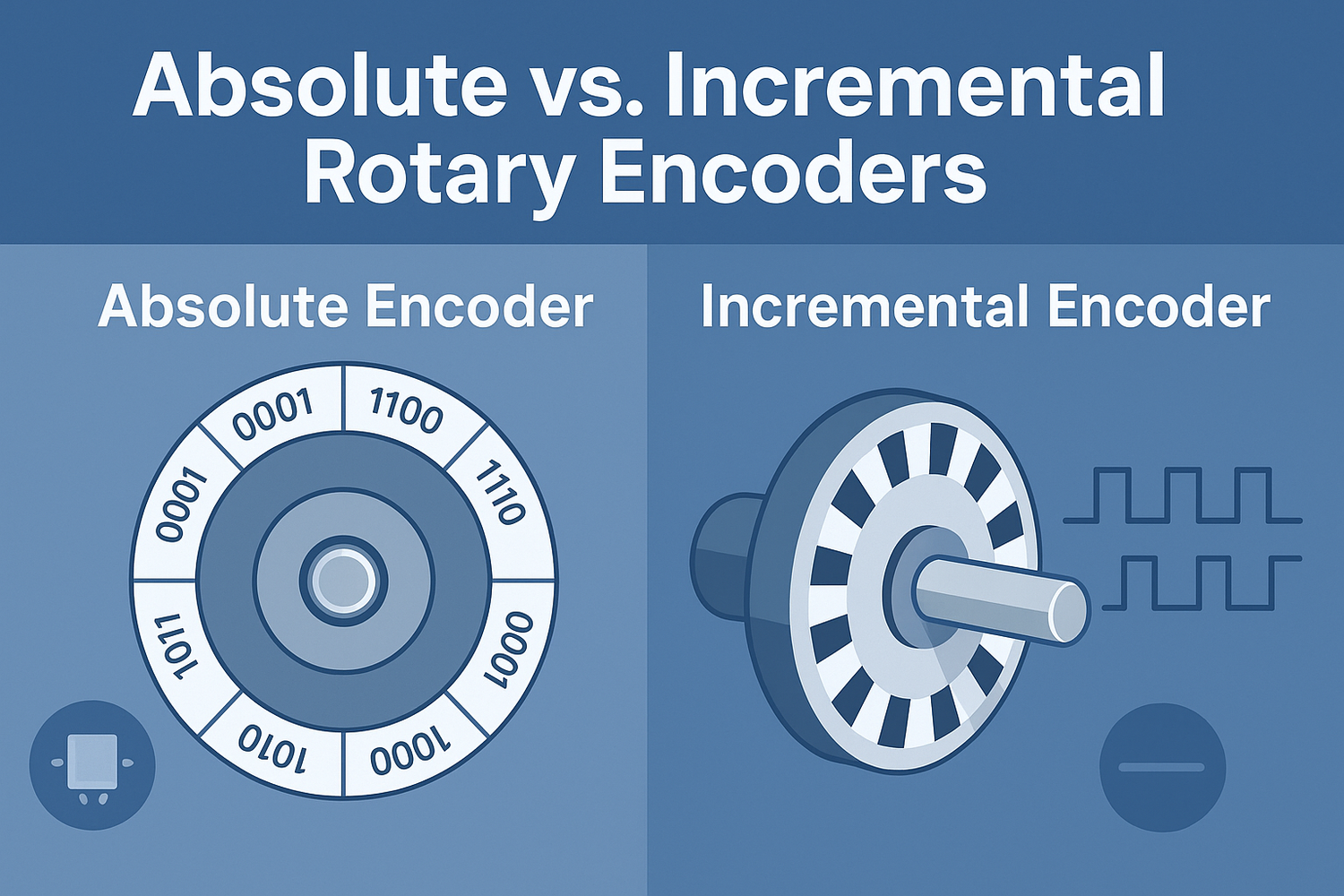
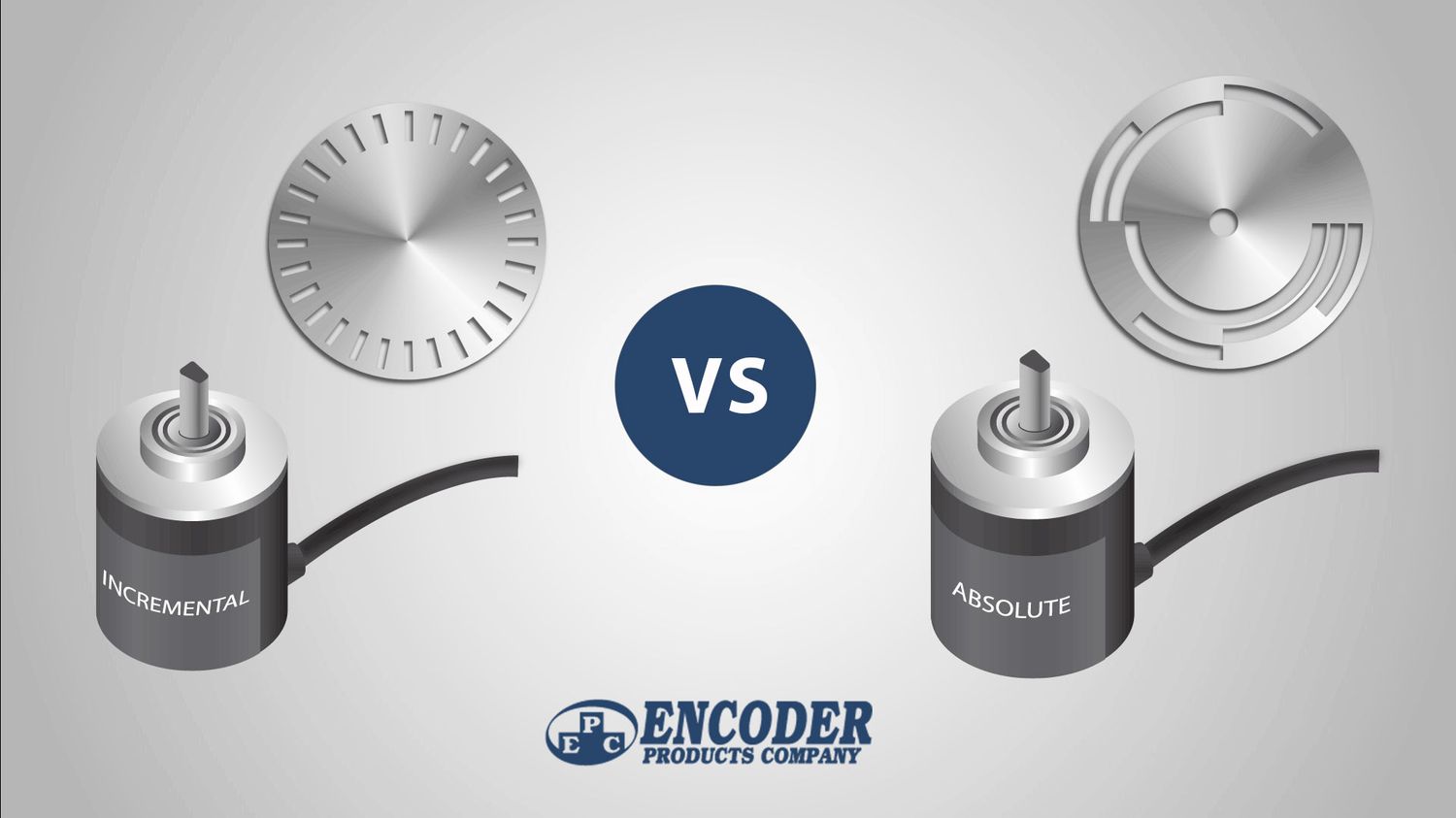
Absolute rotary encoders offer a distinct advantage by providing unique positional data for every point of rotation. Each shaft position corresponds to a specific digital output, ensuring accurate positioning even after power interruptions or system restarts.
Key Features:
- Unique Position Identification: Each position has a distinctive binary output.
- Non-volatile Memory: Remembers position information even without power.
- Immediate Position Feedback: Instantly available upon system startup.
Advantages:
- No Reference Needed: Absolute encoders eliminate the need for reference or home positions upon startup, greatly reducing downtime and initialization periods.
- Enhanced Reliability: Since positional data is retained without power, absolute rotary encoders are highly reliable in mission-critical applications.
- Reduced Error Risk: By continuously tracking positions, absolute encoders minimize cumulative measurement errors.
Common Applications:
- Robotics
- CNC machinery
- Automated guided vehicles (AGVs)
- Industrial automation requiring precise and immediate positioning
Incremental Rotary Encoders: Simplicity and Cost-Effectiveness
Incremental rotary encoders operate differently by generating pulses as the shaft rotates, measuring movement relative to an initial or reference position. They do not provide unique positional feedback without referencing, but their simplicity makes them highly effective and economical for specific applications.
Key Features:
- Pulse Generation: Outputs pulses proportional to rotation.
- Relative Positioning: Requires a reference or "home" position upon startup.
- Cost-Effectiveness: Typically less expensive due to simpler construction.
Advantages:
Cost Efficiency: Incremental encoders are generally more affordable, suitable for applications where budgets are constrained.
- Simpler Integration: Their straightforward design and operation simplify integration into various systems.
- High Speed Capability: Ideal for systems that require accurate speed and motion tracking over continuous rotations.
Common Applications:
- Conveyors and material handling
- Packaging equipment
- Motor speed feedback
- General-purpose motion control
Choosing Between Absolute and Incremental Rotary Encoders
Deciding which encoder type is right for your system ultimately depends on your specific application requirements and constraints. Here are a few critical considerations to guide your choice:
- Application Precision: If your system requires precise and immediate positional data without recalibration, absolute rotary encoders are generally the best option.
- System Reliability and Downtime: For critical applications where reliability is paramount and downtime due to recalibration is costly, absolute encoders provide unmatched benefits.
- Budget and Simplicity: Incremental encoders are typically preferable when cost is a significant factor or when simplicity in integration and maintenance is desired.
- Speed and Resolution Requirements: For high-speed, continuous rotational tracking with lower positional accuracy requirements, incremental encoders are often more suitable.
Expert Advice and Quality Solutions
Ultimately, selecting the right rotary encoder involves balancing accuracy, reliability, budget, and application-specific needs. Companies like Encoder Products Company offer a comprehensive range of high-quality rotary encoders designed to meet diverse operational demands. Whether absolute or incremental, ensuring your choice aligns closely with your system's requirements can significantly enhance your operation's performance, efficiency, and longevity.
FAQs
Q1: What is the main difference between absolute and incremental rotary encoders?
Absolute rotary encoders provide a unique position code for each angular position, retaining positional data even after power loss. Incremental rotary encoders produce pulses relative to an initial reference point, requiring re-calibration after power loss.
Q2: Which type of rotary encoder is more accurate?
Absolute rotary encoders generally offer higher accuracy due to their ability to retain unique positional information without needing a reference or recalibration.
Q3: Can incremental encoders measure absolute position?
No, incremental encoders measure relative position and require a reference or home position to determine absolute location.
Q4: Are absolute rotary encoders more expensive than incremental encoders?
Yes, typically absolute rotary encoders are more expensive due to their advanced features and precision.
Conclusion
Both absolute and incremental rotary encoders provide unique advantages tailored to different operational needs. Absolute rotary encoders excel in precision, reliability, and immediate feedback, making them indispensable in high-accuracy applications. In contrast, incremental rotary encoders offer cost-effective, efficient solutions ideal for general-purpose positioning and speed tracking. By carefully considering your application's specific needs and constraints, you can confidently select the encoder type that maximizes performance, minimizes downtime, and optimizes overall operational efficiency.
